
The Passion Flower
Another revelation of Christ in creation

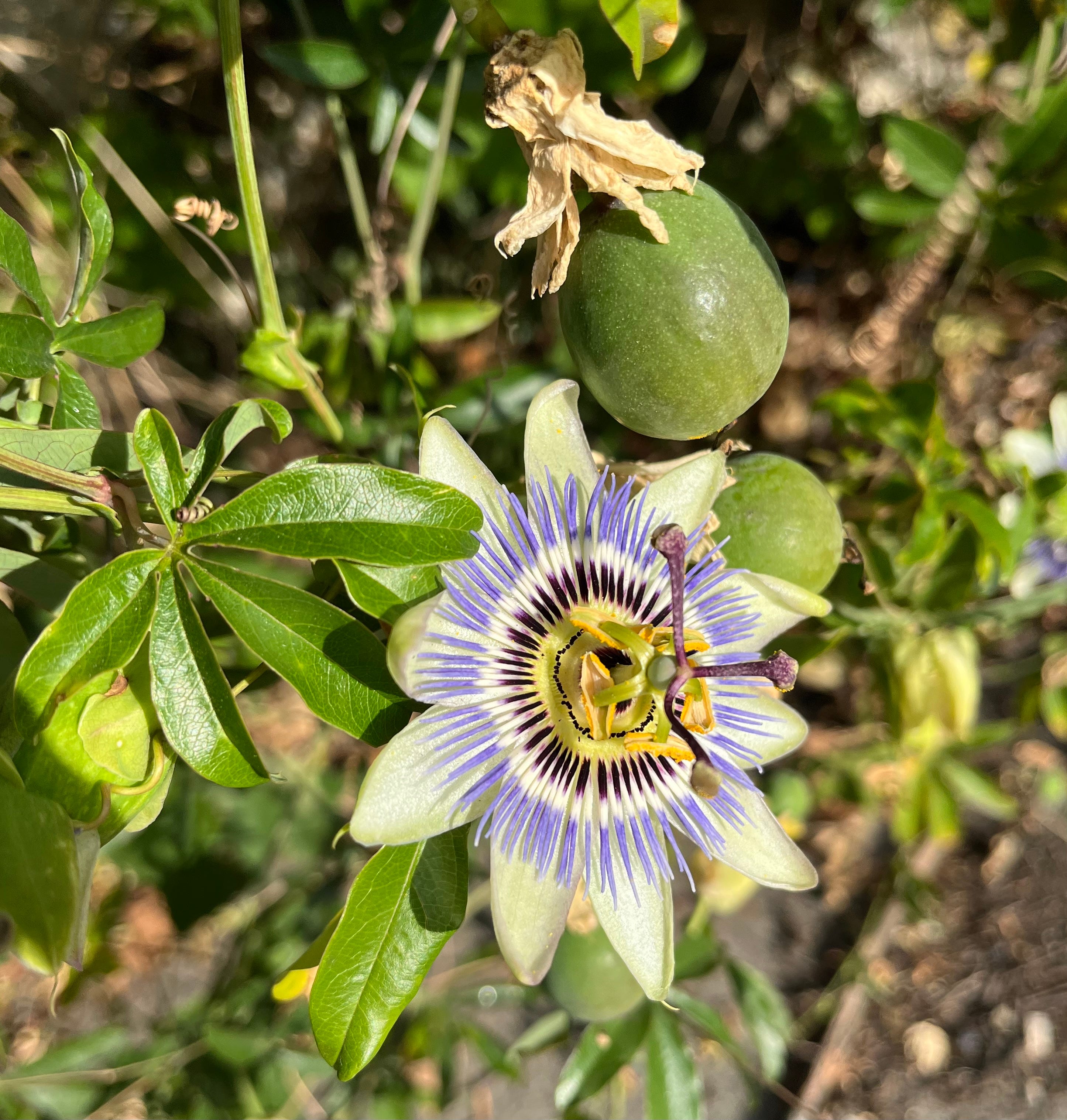
Every Tuesday morning at 8.30am ET about 30 or 40 souls gather online for Space for God, 30 minutes to create, well, space for God. Recently I led one of those reflections using photos from Tara’s and my pilgrimage on the Camino in Spain as aids to contemplation and guided reflection.
One of the photos I chose was that of a flower that we passed on the Camino that caught my attention (the photo above). I’d been taking pictures of big skies and landscapes, and felt nudged to look for beauty in smaller things, and this flower in particular was certainly a lot of beauty in a small thing. Upon returning, and zooming in on the picture of what was still to me a nameless flower, its beauty and delicacy and complexity became all the more evident, and really rather amazing. Wow, that’s a lot going on in something not even three inches wide!
I had to include it in my Space for God reflection.
Afterwards, Wanda Bickers sent me an email with an exclamation and explanation. “That’s a Passion Flower!”, she let me know, which was news to me. It’s a flower that tells the story of the passion and suffering of Jesus on the cross. Wanda didn’t give me the Latin, but here it is from Wiki: “Passiflora, known also as the passion flowers or passion vines, is a genus of about 550 species of flowering plants, the type genus of the family Passifloraceae”, found all over the world.
You’ve probably seen one, I may have as well and just never noticed it. You’ve probably eaten a passion fruit, I didn’t realize it had a flower laden with so much meaning!
The passion flower’s symbolism is primarily tied to the Passion of Christ, with its parts representing various elements of the Crucifixion story as interpreted by Spanish missionaries in the 15th and 16th centuries.
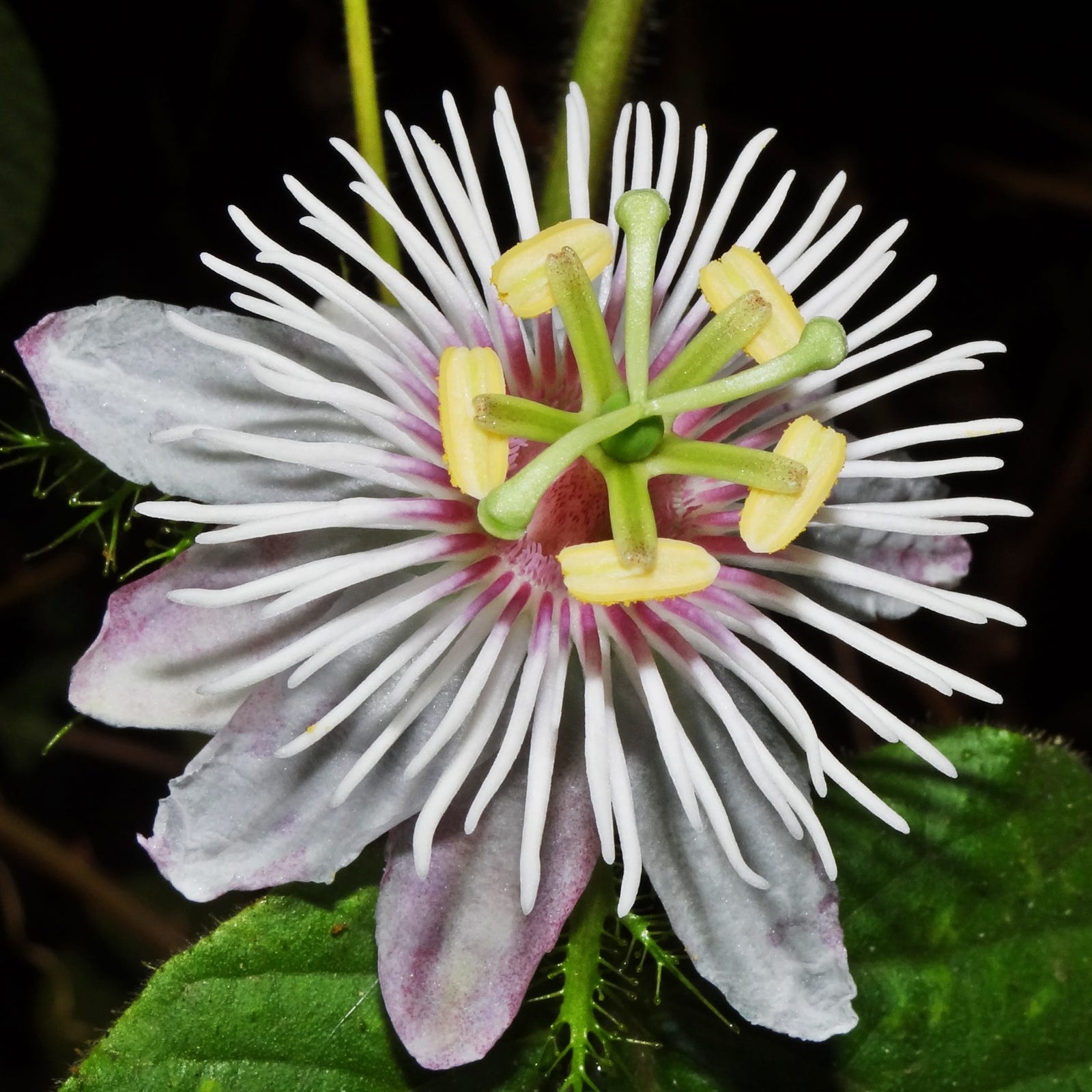

Again from Wikipedia:
The pointed tips of the leaves were taken to represent the Holy Lance.
The tendrils represent the whips used in the flagellation of Christ.
The ten petals and sepals represent the ten faithful apostles (excluding St. Peter, who denied Jesus three times, and Judas Iscariot, who betrayed him).
The flower’s radial filaments, which can number more than a hundred and vary from flower to flower, represent the crown of thorns.
The chalice-shaped ovary with its receptacle represents the Holy Grail.
The three stigmas represent three nails and the five anthers below them five hammers or five wounds (four by the nails and one by the lance).
The blue and white colors of many species’ flowers represent Heaven and Purity.
In addition, the flower is open for three days, symbolising the three years of Jesus’ ministry.
The flower has been given names related to this symbolism throughout Europe since the 15th century. In Spain, it is known as espina de Cristo (’thorn of Christ’). Older Germanic names include Christus-Krone (’Christ’s crown’), Christus-Strauss (’Christ’s bouquet’), Dorn-Krone (’crown of thorns’), Jesus-Lijden (’Jesus’ passion’), Marter (’passion’) or Muttergottes-Stern (’Mother of God’s star’).
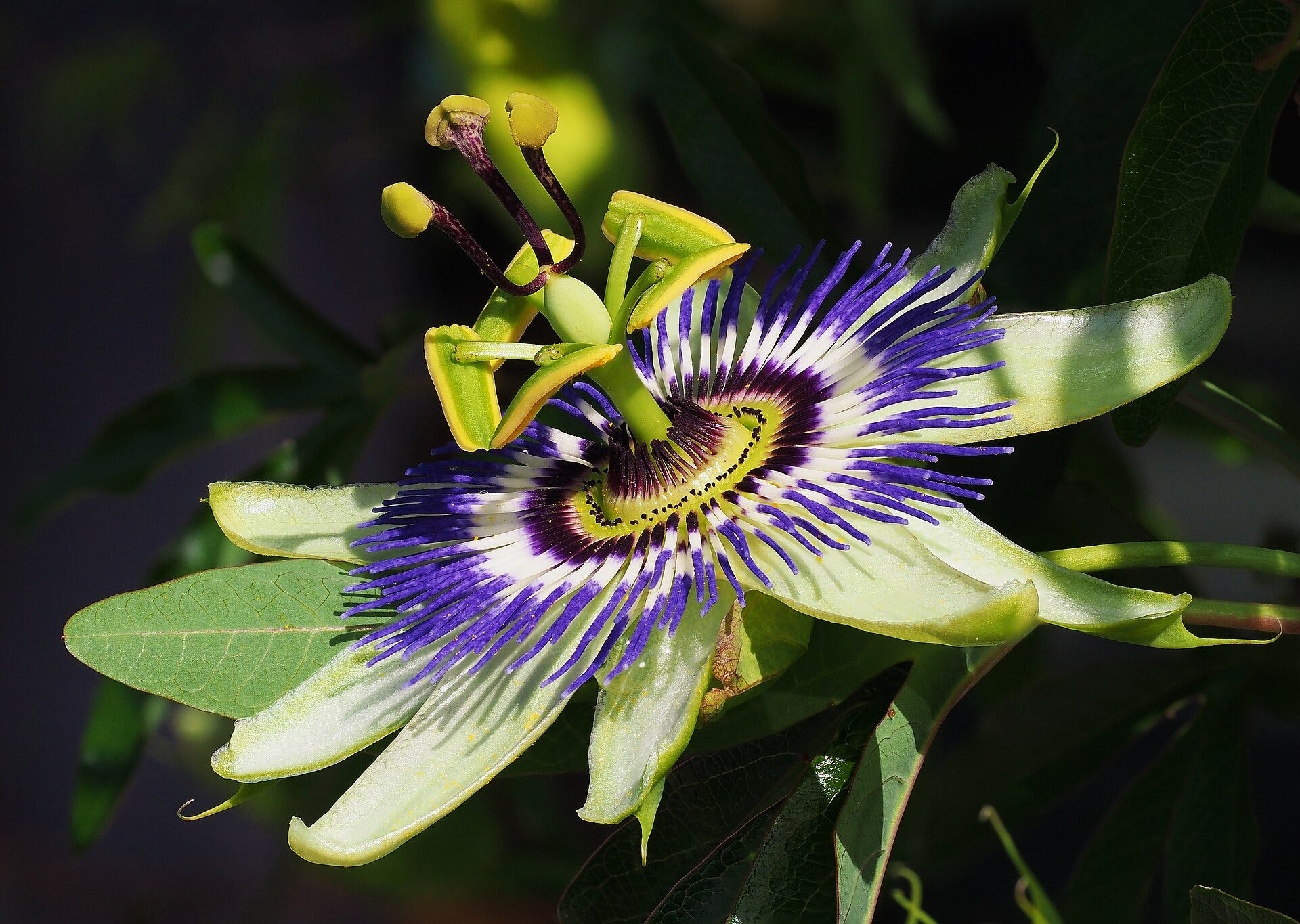
That’s a lot of revelation going on in a little flower!
It pays rich dividends to keep our eyes open to beauty in small things, something we can all do for free. Sometimes we’re led directly to praise!